
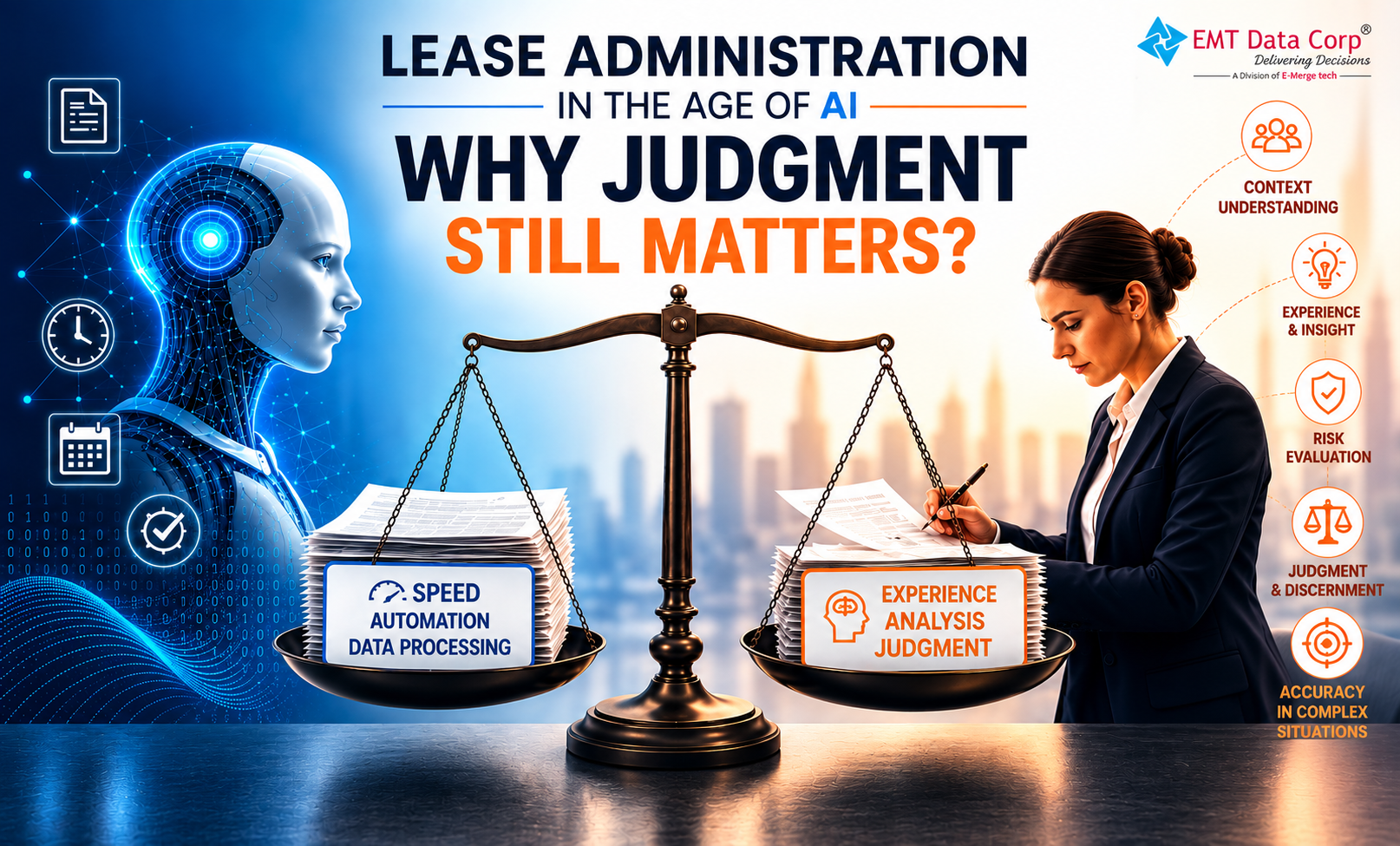
Lease Administration In The Age Of AI Why Judgment Still Matters?
When One Missed Renewal Date Becomes a Boardroom Conversation
Imagine a premium retail location generating millions of dollars in annual revenue. Business is thriving, customers are loyal, and the location is one of the organization’s best-performing assets. Then a single administrative oversight changes everything.
A critical lease renewal deadline is missed.
Landlord, seeing an opportunity to lease the space at a significantly higher rent, refused to honor the renewal.
The board of directors received an explanation that no executive ever wants to deliver:
"Our most profitable location is at risk because of a lease administration error”
While every lease portfolio is different, scenarios like this demonstrate how a single missed critical date can create significant operational and financial consequences.
As Artificial Intelligence (AI) continues to transform Lease Administration, organizations are increasingly asking an important question:
Can AI alone be trusted to manage one of an organization’s most valuable real estate assets?
AI Is Transforming Lease Administration
Commercial lease administration has evolved significantly over the past few years. Managing hundreds – or even thousands of leases, amendments, notices, and supporting agreements manually is both time consuming and resource intensive.
This is where Artificial Intelligence has transformed the industry.
Today’s AI-powered solutions can rapidly classify documents, extract lease data, identify clauses, perform lease abstraction, digitize portfolios, and accelerate document review. These capabilities reduce manual effort, improve consistency, and help organizations process large lease portfolios more efficientl.
AI has become an essential component of modern lease administration. However, processing information quickly is only one part of effective lease management. The real value lies in ensuring that the information accurately reflects contractual obligations and supports confident business decisions.
AI Reads Documents. Lease Professionals Interpret Business Risk
AI is exceptionally effective at identifying lease clauses, extracting dates, and locating key contractual information.
However, commercial Lease Administration requires more than accurate extraction – it requires understanding the business context behind the lease.
For example, AI may correctly identify a renewal option stating:
“Tenant has one renewal option exercisable within 180 days before lease expiration.”
An experienced lease professional will ask additional questions:

• Was this provision modified by a later amendment?
• Has the renewal option already been exercised?
• Does another agreement supersede the original clause?
Similarly, if a lease states that rent begins “90 days after substantial completion,” the extracted date alone is not enough.
Understanding how “substantial completion” is defined, whether construction delays occurred, or whether the commencement date was later amended requires professional interpretation.
Technology identifies information. Experienced professionals evaluate its business significance.
Context Cannot Always Be Automated
Commercial leases are legal agreements shaped by negotiations, amendments, business relationships, and Operational requirements.
Lease administration extends well beyond tracking renewal dates.
Property managers and corporate real estate teams depend on accurate lease data to manage rent commencements, escalations, CAM reconciliations, insurance obligations, maintenance responsibilities, security deposits, tenant improvement allowances, exclusive-use clauses, co-tenancy provisions, assignment rights, and critical notice periods.
While AI continues to improve, certain lease provisions still require human validation, particularly where multiple amendments, negotiated exceptions, or complex contractual language exist.
While AI continues to improve, certain lease provisions still require human validation, particularly where multiple amendments, negotiated exceptions, or complex contractual language exist.
Compliance Depends on More Than Accurate Data Extraction
AI can significantly improve the speed and consistency of lease data extraction, but experienced professionals continue to play an important role in validating information before it is used for financial reporting or strategic decision-making.
Organizations reporting under ASC 842 and IFRS 16 rely on lease data to support right-of-use asset calculations, lease liabilities, financial disclosures and audit readiness.
Accurate lease information is essential not only for operations but also for financial reporting and compliance.
The Second Set of Eyes Principle
One principle continues to distinguish high-performing Lease Administration Services teams:
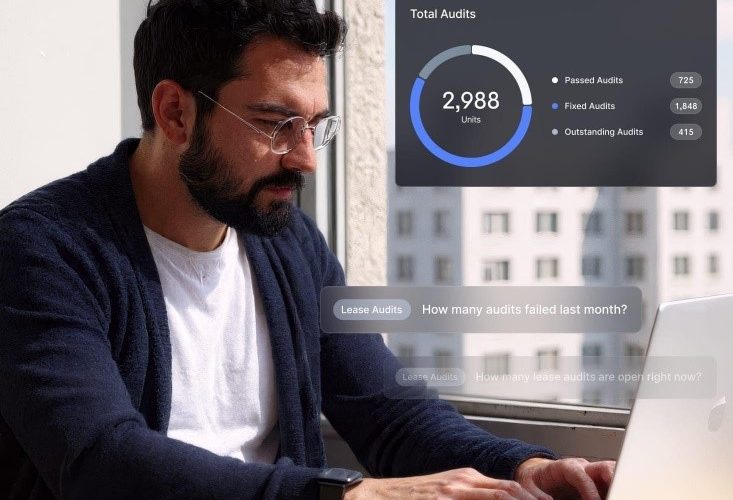
Critical lease information should be independently validated before it is relied upon.
This is not about questioning technology. It is about reducing risk.
Organizations recognize that quality assurance remains an essential part of Commercial Lease Administration.
An independent review often identifies issues that automated extraction alone may not detect, including
• Missed lease amendments
• Incorrect critical dates
• Incomplete lease abstractions
• Rent schedule inconsistencies
• Missing landlord or tenant obligations
• Data that requires further clarification
This additional layer of review helps improve accuracy while strengthening confidence in the information used by finance, real estate, and operations teams.
Human Expertise Delivers Strategic Value
Experienced lease professionals contribute far more than data validation. They help identify opportunities and risks beyond automated review.
Comprehensive lease reviews often identify:
• Upcoming renewal opportunities
• Rights to terminate or expand
• Landlord maintenance obligations
• Recoverable security deposits
• Incorrect operating expense allocations
These insights support budget planning, occupancy forecasting, capital planning, tenant communication, portfolio optimization, and informed real estate decision-making.

Technology accelerates workflows. Experienced professionals transform lease data into business intelligence.
The Bottom Line
Artificial Intelligence is reshaping commercial lease administration by enabling organizations to process lease information faster, improve consistency, and manage increasingly complex portfolios more efficiently.
At the same time, effective lease administration has never been solely about processing documents. It is about protecting business value, supporting compliance, reducing operational risk, and enabling confident decisions throughout the lease lifecycle.
Organizations do not need to choose between automation and expertise. The strongest lease administration programs combine AI-powered efficiency with experienced professionals who validate critical lease information, interpret complex contractual provisions, and help ensure that lease data supports sound operational, financial, and strategic decisions.
Technology delivers speed. Experienced professionals deliver judgment. Together, they create the accuracy, confidence, and accountability that effective Lease Administration demands.
The purpose of this blog is to provide a general insights into the into the evolving role of Artificial Intelligence (AI) and human expertise in Lease Administration, and to highlight the importance of balancing automation with professional judgment to support informed decision-making. The readers of this blog are advised to consider this as general information based on our research and understanding. Hence, this cannot be taken as either comprehensive or authentic guidance or advice.
